
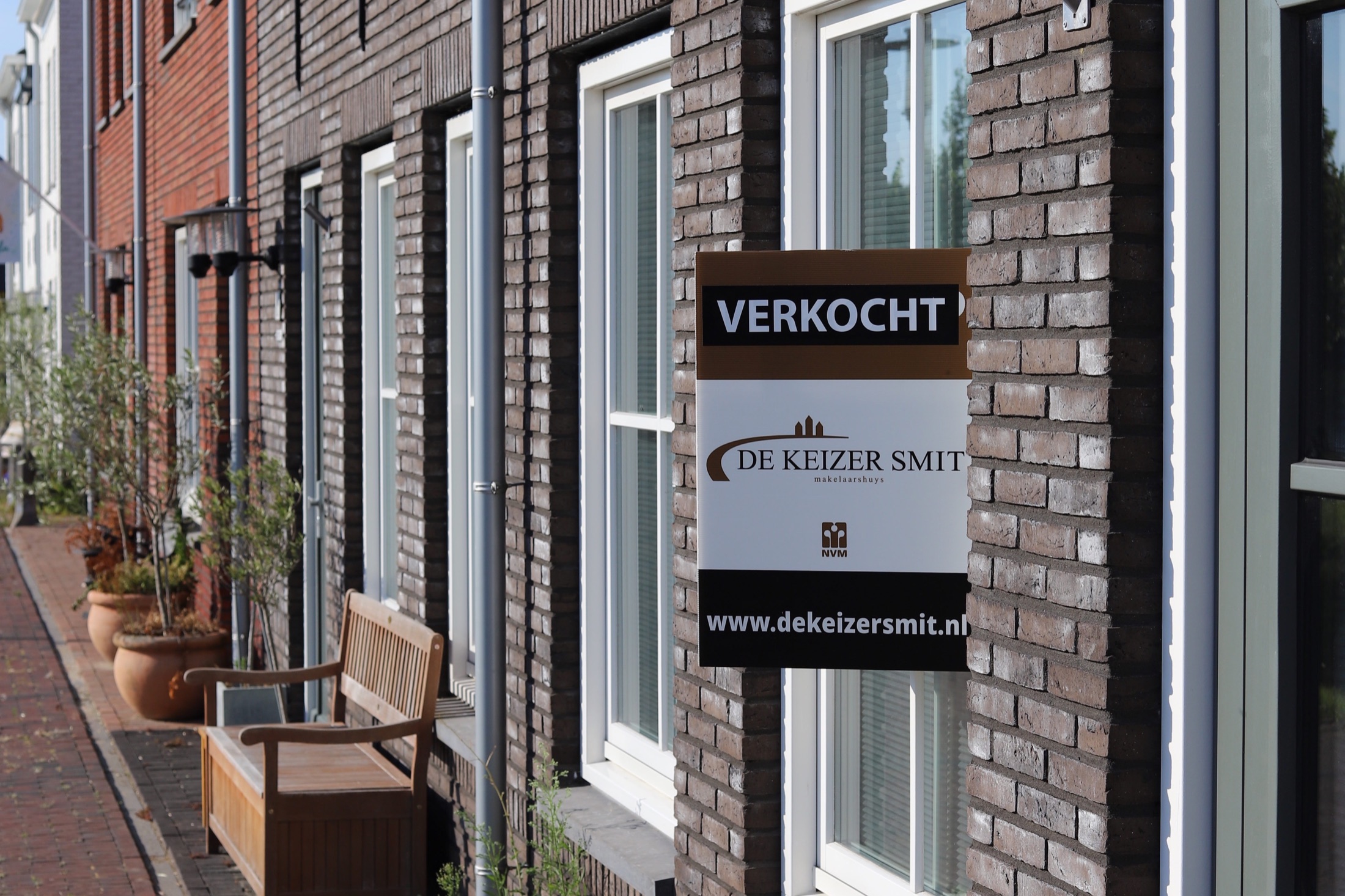

On Budget Day, the Dutch government presented its 2027 budget and Tax Plan. For homebuyers, the impact comes from a combination of transfer tax, housing-supply policy and household income. Some changes are concrete for 1 January 2027, while much of the construction funding is intended to accelerate building in later years. The tax measures are still proposals: both houses of parliament will consider them this autumn (Dutch government, 2026a).
Budget Day in brief
The value ceiling for the first-time buyer exemption will be € 615,000 in 2027. Buyers who do not qualify and will live in the property themselves continue to pay 2% transfer tax. The proposed 7% rate applies to homes that will not be used as the buyer’s main residence.
The important distinction
Housing billions may improve supply, but not before your next viewing.
New sites, subsidies and investment could ease the market over time. Much of the funding, however, starts in 2028 or 2029. Base a bid in 2026 or 2027 on the home and competition you face now, not on a national building target.
Transfer tax: 0%, 2% or potentially 7%
If you buy a home to live in permanently, the standard rate remains 2%. Buyers under 35 may use the exemption once if all conditions are met. The property-value ceiling rises from € 555,000 in 2026 to € 615,000 on 1 January 2027 (Official Gazette, 2025). That increase had already been set through annual indexation, so it is not a new Budget Day decision.
On a € 615,000 home, the exemption avoids up to € 12,300 in transfer tax. Do not automatically treat that amount as extra bidding room: advice, the notary, valuation, maintenance and a post-purchase buffer still have to be paid.
Age is assessed on the date the notarial transfer deed is signed. When buying together, eligibility is assessed per buyer, but the ceiling applies to the value of the entire property. Each buyer must also declare that the home will be their main residence (Dutch Tax Administration, 2026).
The government also proposes reducing the rate for homes that are not used as a main residence from 8% to 7% in 2027. This includes rental and second homes. On a € 400,000 purchase, an investor would save € 4,000; on € 500,000, € 5,000. It is not a discount for an owner-occupier (Ministry of Finance, 2026).
Possibly, but the effect will differ by segment and location. A lower investor rate makes some rental purchases marginally more attractive. That could increase competition for properties suited to letting. This is SlimBieden’s market interpretation, not a government price forecast, and parliament may still amend the proposal.
For first-time buyers: most immediate room comes from existing schemes
The € 615,000 exemption ceiling is the most direct benefit for eligible buyers completing in 2027. A purchase agreement signed in 2026 does not by itself secure the 2027 ceiling; the date of the notarial transfer is decisive.
‘Affordable owner-occupied housing’ is the government’s term for new-build homes priced below a set ceiling. In 2027, that ceiling will be € 435,000, up from € 420,000 in 2026 (Volkshuisvesting Nederland, 2026a). It is a policy limit used in construction agreements and subsidy schemes. It does not mean that every home below the limit is sold at a discount or that every buyer qualifies for support.
The National Fund for Affordable Owner-Occupied Homes is allocated an additional € 100 million for 2028–2034. The first extra tranche is scheduled for 2028, so it does not create new supply on 1 January 2027. Under the fund’s current rules, selected new-build homes come with at least a 10% buyer discount and up to € 70,000 in support. Buyers must be under 35, have household income up to € 93,531 and buy within the applicable affordability ceiling. Buyers cannot apply to the fund directly; participating developers and housing associations offer the homes (National Fund for Affordable Owner-Occupied Homes, 2026).
When the home is sold, the discount is settled and the fund shares in the gain or loss in value. It is therefore not a gift. Conditions for the additional tranches from 2028 could still change, so check the specific project information.
For movers: no new buyer discount, but possible indirect effects
If you are 35 or older, have already used the exemption or do not meet its conditions, the 2% owner-occupier transfer-tax rate remains. Budget Day introduced no separate discount for movers and no immediate change to mortgage-interest relief.
Movers could benefit indirectly from the construction programme over time. The government wants two thirds of new homes to be affordable: 30% social rent and 25% affordable owner-occupied housing. Around 400,000 homes are planned across 31 large-scale locations by 2035. The budget also includes an additional € 635 million for senior housing and € 450 million for homes with shared facilities. More suitable homes for older residents could start moving chains, but the budget does not guarantee a specific number of existing homes becoming available in your area (Ministry of Housing and Spatial Planning, 2026).
For an existing home, local evidence still matters most: comparable sales, time on the market and the number of serious bidders. A national billion-euro figure says little about competition at one address.
Where exactly will the housing billions go?
The government maintains its target of 100,000 new homes per year. A total of € 7 billion is reserved for 2029–2035, averaging € 1 billion a year. This includes € 2.3 billion for a € 7,000 realisation incentive per affordable home, € 940 million for large-scale sites, € 650 million for the Housing Construction Impulse, € 205 million for innovation and better use of existing buildings, and € 180 million for municipal land purchases (Volkshuisvesting Nederland, 2026b).
There are two practical lessons. First, a large share of the money comes after 2027. Second, the plan is not limited to building on urban edges. Splitting homes, house sharing, lodger schemes and converting existing buildings should also add capacity. These measures could have a faster local effect, but depend on municipal plans and concrete projects.
What to take away
Look for projects, not just policy totals.
Ask the municipality which sites, conversions and affordable-purchase projects already have a timetable, permission and sales date. That tells you more about your future options than a national target.
Purchasing power is not the same as mortgage capacity
The budget forecasts contractual wage growth of 3.8% and inflation of 2.7% in 2027. Yet median purchasing power is expected to fall by 0.1%. The government proposes a € 173 increase in the employed person’s tax credit and a 0.06 percentage-point reduction in both the first and second income-tax rates (Ministry of Finance, 2026b).
A higher gross salary can increase borrowing capacity, but the result also depends on interest rates, student debt, other obligations and official lending standards. Budget Day did not publish a final 2027 NHG limit or the complete 2027 mortgage standards. Do not infer an exact loan amount from the wage forecast or tax credit alone. Use the 2027 rules once lenders and advisers actually apply them.
What can you do with this as a buyer?
If the exemption ceiling matters to you, ask whether the notarial transfer will take place in 2026 or 2027 before bidding. Then verify every personal condition. A higher ceiling does not change the requirement to be under 35 on the transfer date and not to have used the exemption before.
If a new-build project is marketed as ‘affordable owner-occupied housing’, read the project conditions. Rules may apply to owner occupancy, resale, repurchase or sharing a later increase in value. With a home supported by the National Fund, the scheme therefore also affects how much you retain when you sell.
If you want to know what an existing home is worth and which bid fits that value, you do not have to calculate it yourself. A SlimBieden report estimates the property value and shows the expected chance of success at different bid amounts. Your maximum mortgage and the financial buffer you want to keep then determine how much you are comfortable bidding.
Sources and status
Dutch government. (2026a, 15 September). Prinsjesdag: Belastingplan 2027 [in Dutch].
Official Gazette. (2025, 11 December). Regeling tot indexering van de woningwaardegrens voor de startersvrijstelling 2027 [in Dutch].
Ministry of Finance. (2026a, 15 September). Wetsvoorstel Belastingplan 2027 [PDF, in Dutch].
Ministry of Finance. (2026b, 15 September). Miljoenennota 2027 [PDF, in Dutch].
Ministry of Housing and Spatial Planning. (2026, 15 September). Rijksbegroting Volkshuisvesting en Ruimtelijke Ordening 2027 [PDF, in Dutch].
National Fund for Affordable Owner-Occupied Homes. (2026). Information for buyers [in Dutch].
Volkshuisvesting Nederland. (2026a, 12 May). € 35 miljoen aangevraagd voor 822 betaalbare koopwoningen [in Dutch].
Volkshuisvesting Nederland. (2026b, 15 September). Woningbouwmiljarden voor meer, sneller en beter bouwen [in Dutch].
Status on 17 September 2026. The Tax Plan and budget proposals still require approval by both houses of parliament. Possible market effects in this article are explicitly presented as SlimBieden’s interpretation, not as guaranteed government outcomes.
From policy to your own bid
What is the right bid for your home?
Enter the property’s address to explore your chances of winning at different bid amounts.